Key takeaways
- Rotors suit large lawns and apply water slowly.
- Spray heads suit small and narrow areas but apply water fast.
- Rotary nozzles are an efficient upgrade for spray bodies.
- Drip suits beds, shrubs and trees.
Rotors
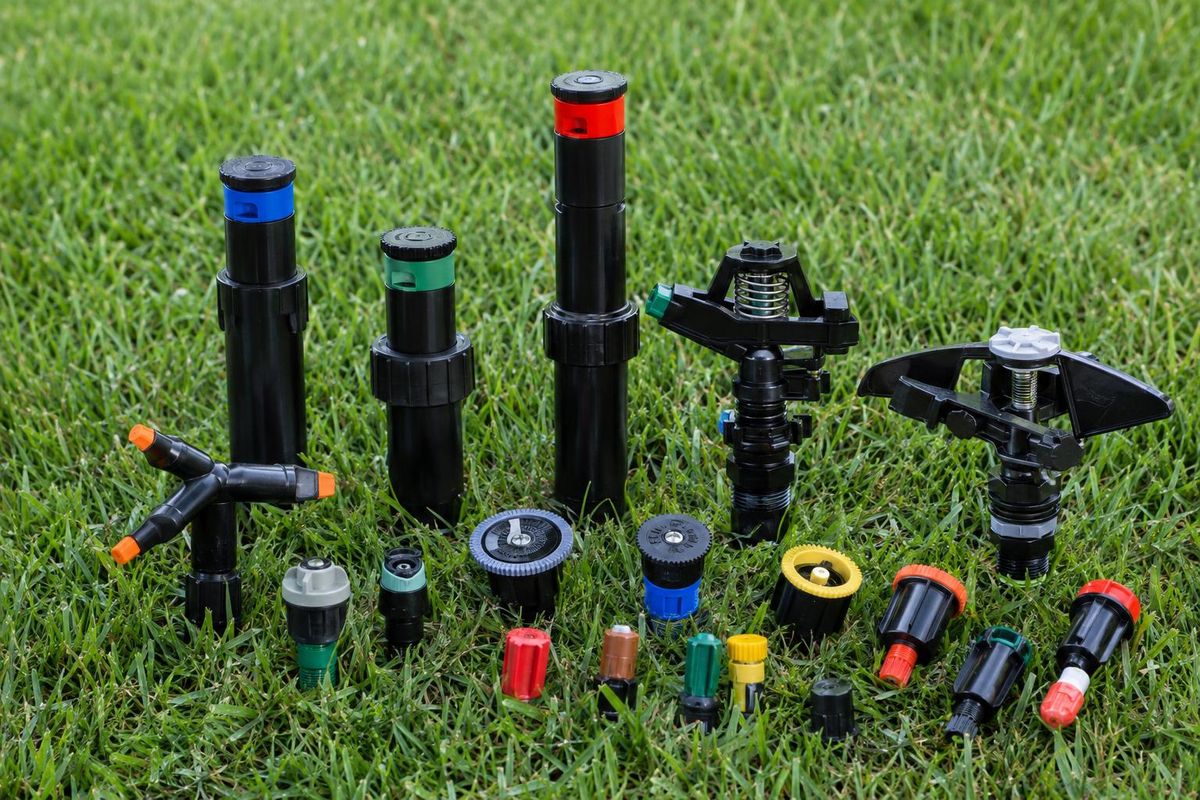
Rotors throw one or more streams in an arc across a large area, and they apply water slowly, which suits clay soil and large lawns. They need space, since they throw a long way.
Rotors and sprays should never share a zone because they apply water at very different rates.
Spray heads
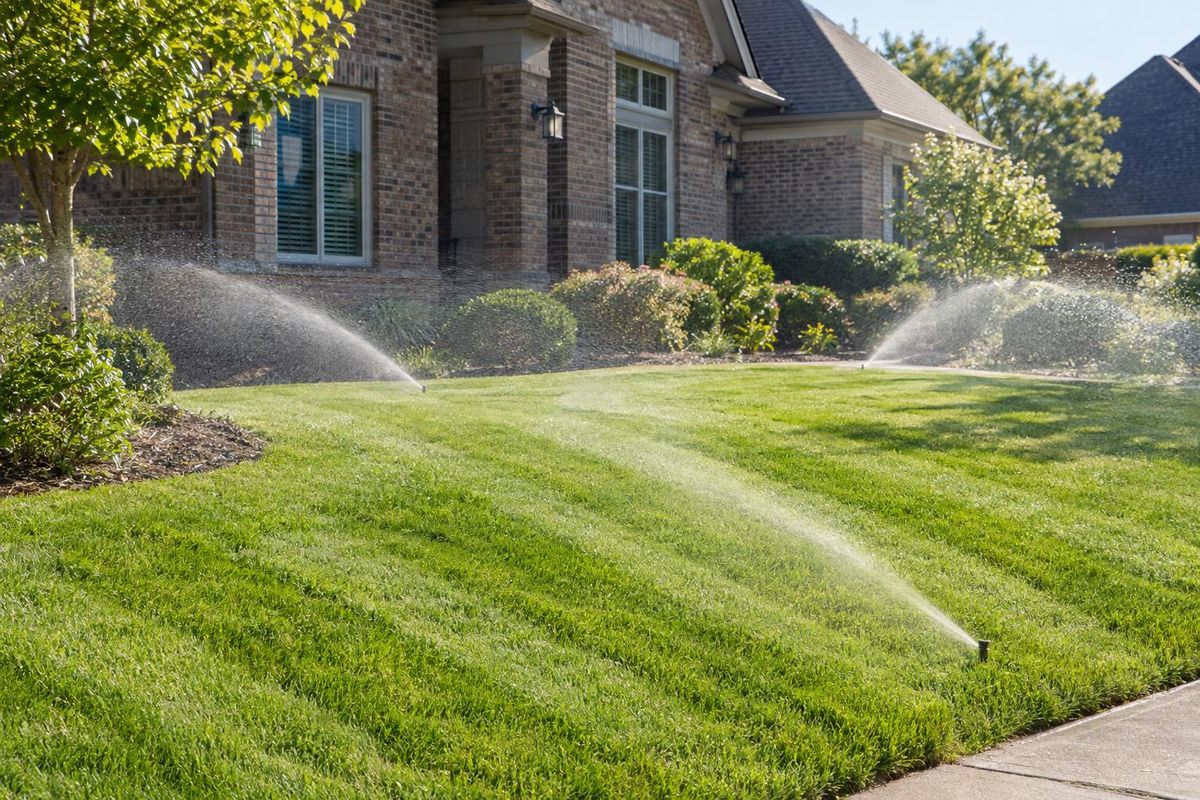
Spray heads fan water out in a fixed pattern over a small radius. They are good for narrow strips, small yards and tight corners, but they put water down quickly, which can cause runoff on clay or slopes.
Their coverage is fine for small areas, and their pattern is easy to adjust.
Rotary nozzles
Rotary nozzles fit many spray bodies and replace the fan with several slow streams. They apply water more slowly and evenly, reduce runoff and let heads reach farther.
They are one of the easiest water-saving upgrades.
Drip
Drip delivers water at the base of each plant through tubing and emitters. It uses less water than sprays, keeps leaves dry and works well under mulch.
Drip belongs on its own zone, since it needs a different schedule than a lawn.
Quick answers
Can I mix rotors and sprays on one zone?
No. They apply water at different rates, so each should have its own zone.
Is drip hard to maintain?
It is simple with a filter and an occasional flush.
Which is best for a small front lawn?
Often rotary nozzles on spray bodies, which handle small areas efficiently.