Key takeaways
- New sod needs frequent, light watering at first.
- Seed needs the surface kept moist until it sprouts.
- Step down to deeper, less frequent watering as roots grow.
- Check moisture, do not just follow the clock.
The first weeks of new sod
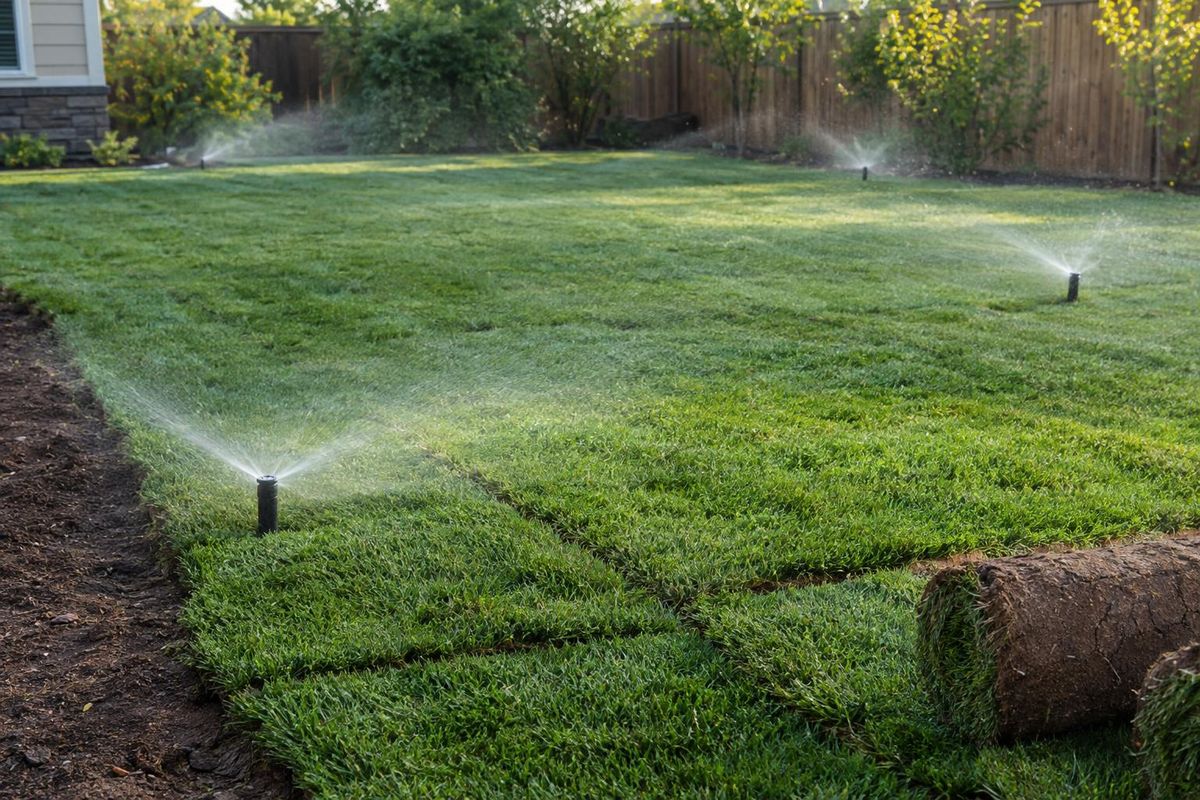
Sod has been cut from its roots and has to grow new ones into your soil. Until that happens, it can only drink from the surface, so it needs frequent, short watering to stay moist without being soaked.
Soggy sod can rot, and dry sod shrinks and curls at the seams.
Seeded lawns
Seed needs the top layer of soil to stay damp until it sprouts, which can mean light watering several times a day for a while. Straw or a light cover helps hold moisture.
Once seedlings are up, cut back the frequency and lengthen the run.
Stepping the schedule down
As roots grow, water less often but for longer. A gentle tug on a piece of sod tells you whether it has rooted. Resistance means it has.
By the time the lawn is mowed regularly, it should be on a deeper watering schedule.
Using an irrigation system
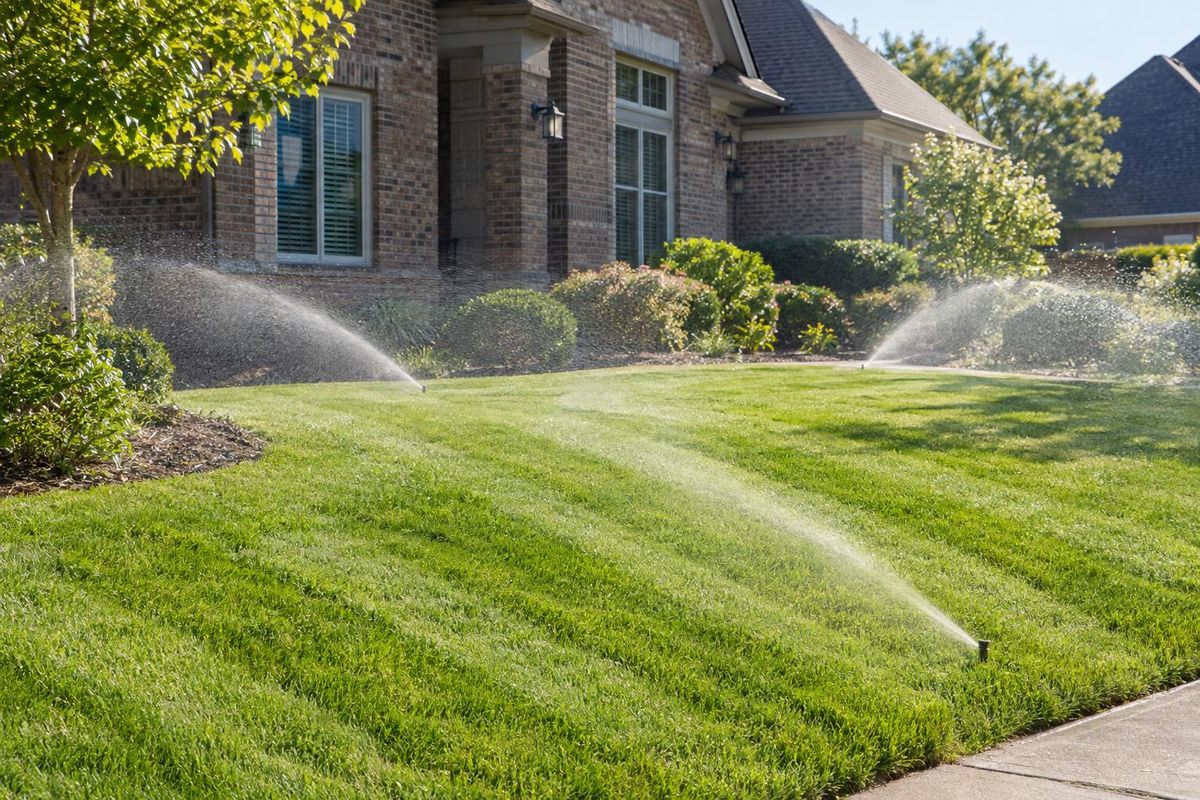
A sprinkler system with a good schedule is far more consistent than moving a hose. Check coverage with the system running, since gaps show quickly on new turf.
Smart controllers and sensors can help keep moisture right as the weather changes.
Quick answers
How long should I water new sod each time?
Short cycles, enough to moisten the sod and the soil just under it. Check by lifting a corner.
Can I walk on new sod?
Keep traffic light until it roots.
When should I mow?
Once the sod has rooted and the grass has grown enough for its first cut.