Key takeaways
- Water left in the pipes can freeze and crack them.
- A compressed-air blowout clears the water from every zone.
- Backflow devices are easy to damage and should be drained.
- Schedule before the first hard freeze.
Why freezing damages a system
Water expands when it freezes. In a closed pipe, valve or backflow device, that expansion splits fittings and cracks bodies. The damage often goes unseen until spring.
Middle Tennessee winters swing between mild and hard freezes, so one cold snap can be enough.
What a blowout does
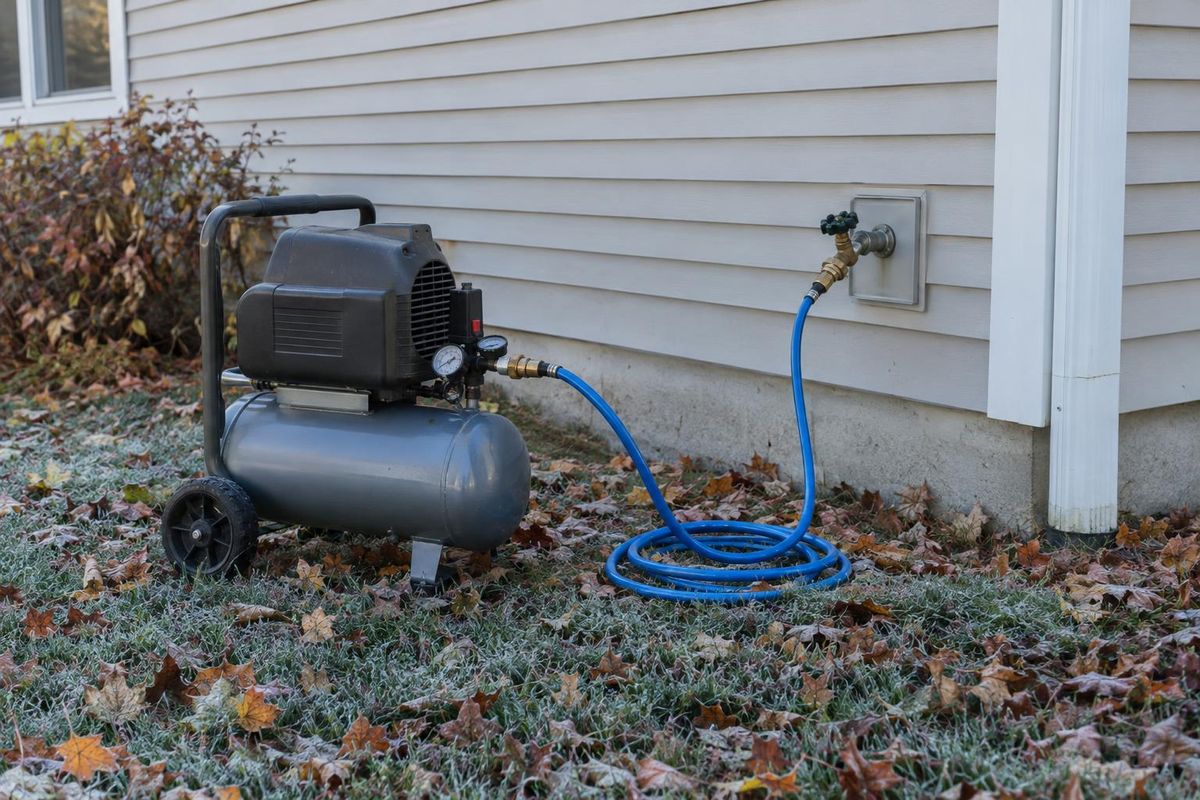
A technician shuts off the water supply, connects an air compressor and runs each zone in turn until the water is pushed out through the heads. Pressure has to be controlled, since too much can harm heads and fittings.
The controller is then set to rain mode or turned off for the winter.
Protecting the backflow device
Backflow devices hold water inside and often sit above ground, so they are a common spot for freeze damage. Draining them and, in some cases, insulating them helps protect them.
If a device cracks, it will leak when you turn on the system in spring.
Timing it right
The goal is to do it after the growing season and before the first hard freeze. In the fall, schedules fill up, so booking early helps.
If you missed it and a freeze is coming, call as soon as possible.
Quick answers
Can I use a shop compressor?
Many small compressors do not supply enough air volume. That is one reason technicians use a larger unit.
Do drip lines need winterizing too?
Yes. Drip lines hold water and should be drained or blown out at lower pressure.
What if I find a leak in spring?
A leak after a freeze often points to freeze damage. Shut off that zone and have it checked.