Key takeaways
- Smart controllers adjust watering to the weather.
- They need zone details to work well.
- Wi-Fi gives phone control and weather data.
- A smart controller is only as good as the system it runs.
What makes a controller smart
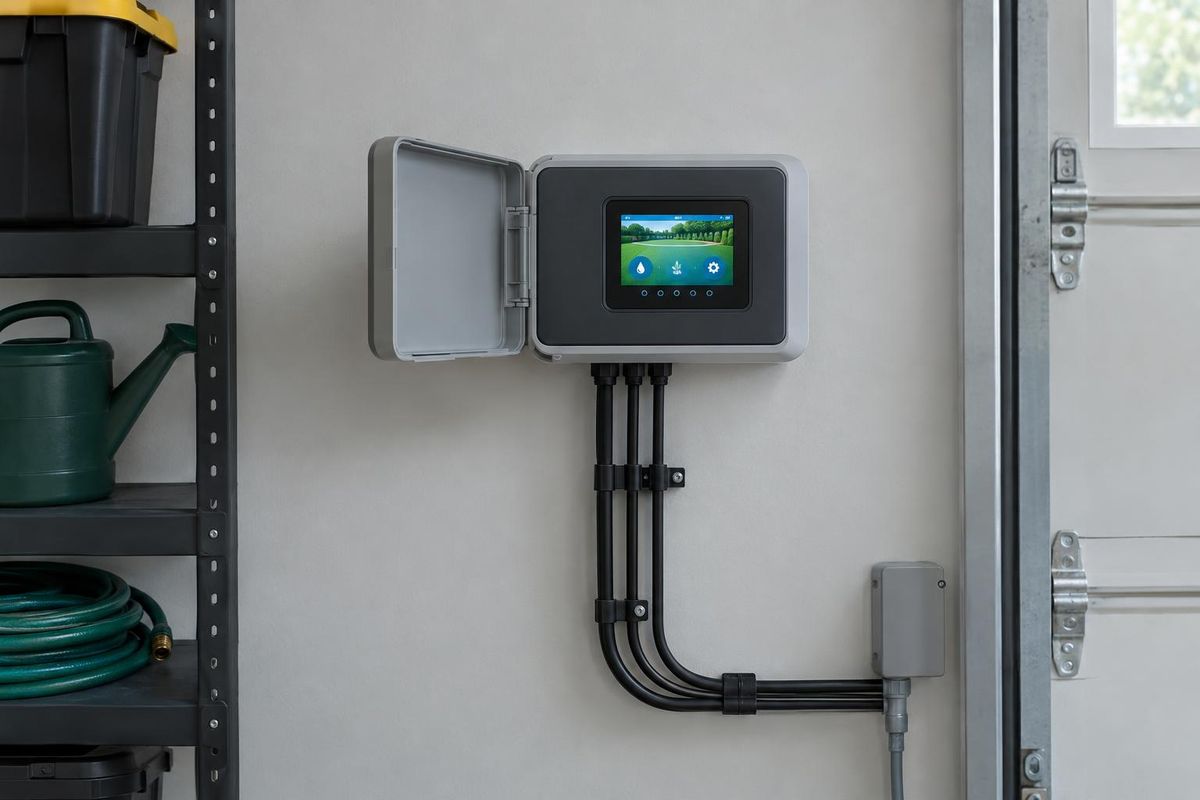
A basic timer runs the same schedule all year. A smart controller uses weather data, local sensors or both to change the schedule so it waters less in cool or wet weather and more in a heat wave.
Many also let you pause, skip or run zones from a phone.
Why zone setup matters
A smart controller needs to know about each zone: the type of sprinkler, the plant, the sun exposure, the slope and the soil. With the wrong details, even the best controller will make poor decisions.
Setup is where a professional can help the most.
Wi-Fi and sensors
Wi-Fi lets the controller pull weather and talk to your phone. Adding a rain, freeze or soil moisture sensor gives it direct readings from your yard.
If the signal at the controller is weak, a range extender or a different mounting spot can fix it.
The system underneath
A smart controller cannot fix a leaking pipe, clogged heads or poor coverage. Check the system, then add smart control.
An audit or inspection is a good first step.
Quick answers
Will a smart controller save water?
It can, especially when it replaces a fixed schedule that runs in all conditions.
What if my Wi-Fi is down?
Most controllers keep running their stored schedule.
Can I install one myself?
Many homeowners do. Wiring and zone setup are the key steps, and help is available if you want it.