Key takeaways
- Dry spots often mean clogged, misaimed or broken heads.
- Soggy spots with no rain can mean a leak.
- A zone that will not start is often a wire, solenoid or valve problem.
- A sudden jump in the water bill deserves a look.
Dry patches in the lawn
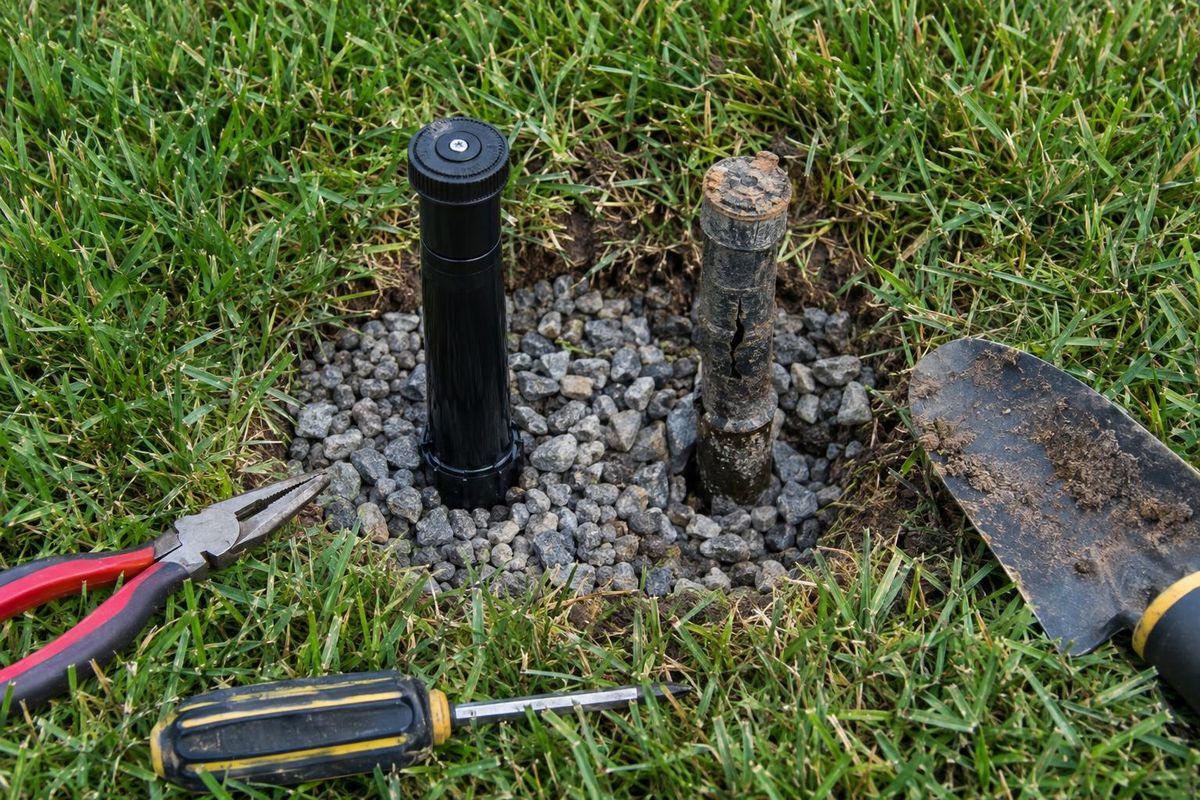
A brown patch next to green grass can be a clogged nozzle, a head that has tilted or sunk, a head that has been broken or a zone with low pressure. Walking the zone while it runs usually reveals which.
If every head looks fine, the problem may be a leak upstream or a controller schedule that is too short.
Wet spots, puddles and geysers
Water where it should not be points to a leak or a broken head. A geyser is a head that has been snapped off. A soggy patch without rain can be a cracked pipe, a leaking fitting or a valve that does not fully close.
Turn off the affected zone until it is fixed to avoid waste and soil damage.
Zones that will not start or stop
A zone that does not turn on can be a controller problem, a wire break, a failed solenoid or a jammed valve. A zone that does not shut off is usually a valve that has debris in it or a torn diaphragm.
Testing in order, from the controller to the valve, finds the cause.
Higher bills and weak spray
An unexplained jump in the water bill can be a hidden leak. Weak or misting spray can mean pressure problems.
A system inspection checks all of these in one visit.
Quick answers
How can I find a leak myself?
Look for wet spots, extra-green patches and heads that weep after a zone shuts off. Turning everything off and watching the water meter can also help.
Is a broken head an emergency?
It wastes water quickly, so it is worth shutting off that zone until it is replaced.
Can I fix a head myself?
Many homeowners can. Matching the head and setting the arc are the tricky parts.